

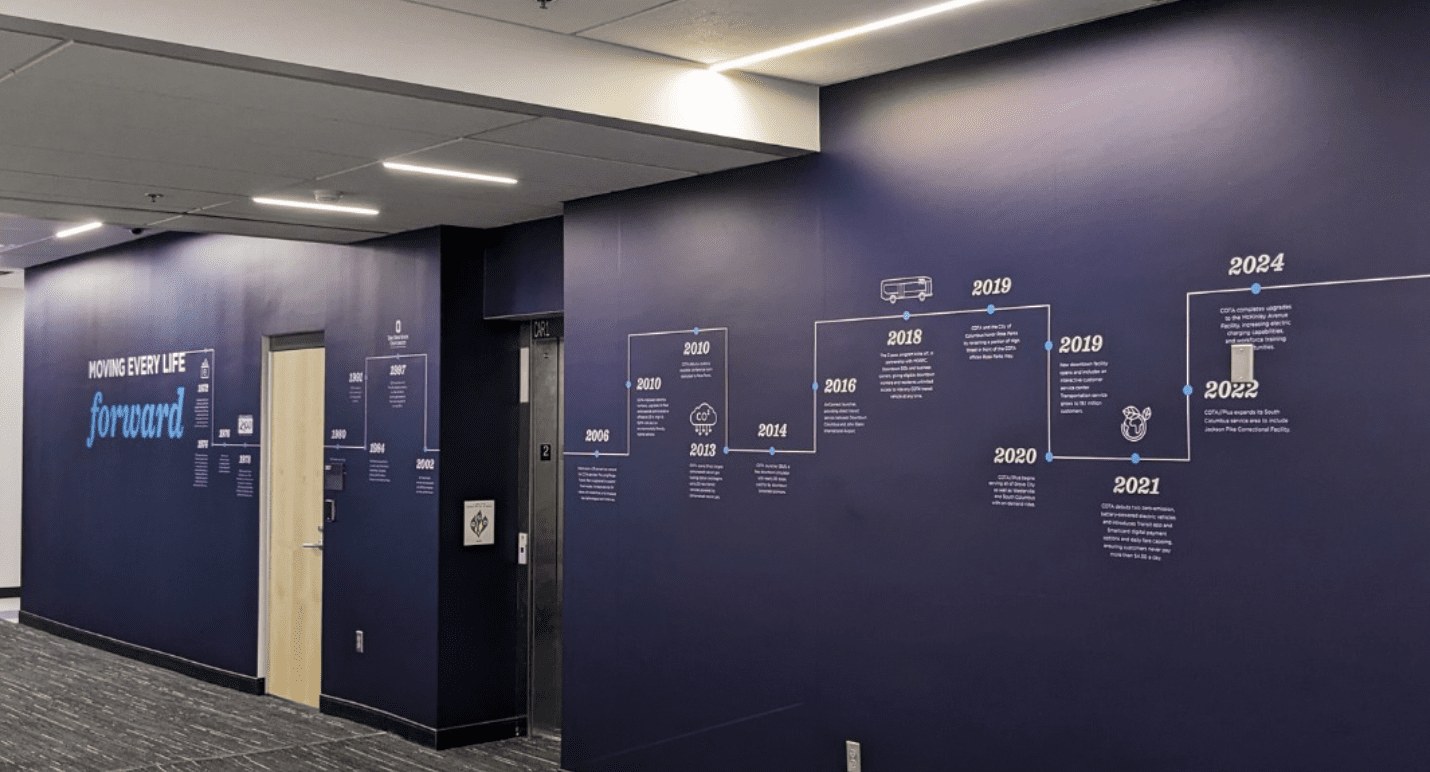
Every physical space tells a story. Environmental graphics design transforms these stories into powerful visual experiences that guide, inform, and inspire everyone who enters.
Contents
What Are Environmental Graphics?
Environmental graphic design is a creative discipline that transforms physical spaces through visual elements that inform, guide, and enhance the user experience. This specialized field blends graphic design, architecture, and interior design to create immersive environments that communicate brand identity and purpose. Unlike traditional graphic design, environmental graphics exist in three-dimensional spaces, creating meaningful connections between people and places.
Environmental graphics include decorative films for glass, wall murals, wall graphics, signage, and more. These visual elements appear in corporate offices, retail stores, museums, healthcare facilities, and educational institutions. They help visitors navigate complex spaces while reinforcing brand messaging and creating memorable experiences.

At its core, environmental graphics design serves both functional and aesthetic purposes. It turns ordinary spaces into extraordinary environments that tell stories and evoke emotions.
Impact of Environmental Graphics
Environmental graphics transform how people perceive and interact with spaces. They create distinctive experiences that leave lasting impressions on visitors and occupants alike.
- Brand Expression: Environmental graphics extend your visual identity into physical spaces, creating cohesive experiences that strengthen recognition.
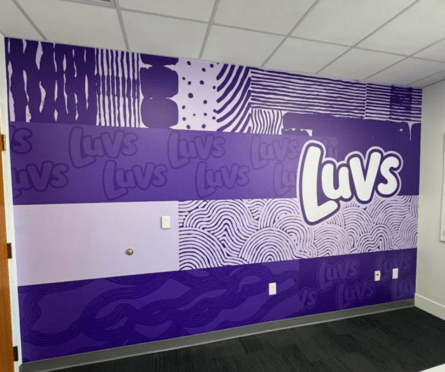
- Intuitive Navigation: Well-designed wayfinding systems guide people through complex environments without confusion.

The right environmental graphics design can turn an ordinary space into a powerful communication tool. They silently convey your values and purpose to everyone who enters.
Key Components for Effective Environmental Graphics
Successful environmental graphics rely on thoughtful integration of several key elements. Typography must be legible from various distances while complementing the overall design aesthetic.
Color palettes should align with brand identity while considering how different hues affect mood and perception. Material selection balances visual impact with practical considerations like durability and maintenance.
- Visual Hierarchy: Guides viewers’ attention to the most important information first
- Spatial Context: Considers how graphics interact with architectural features
- Consistency: Maintains cohesive design language throughout the environment
These components work together to create spaces that are both beautiful and functional. When properly executed, environmental graphics feel like natural extensions of the architecture.
Steps to Integrate Environmental Graphics
1. Define Project Goals
Begin by clarifying what you want your environmental graphics to accomplish. Are you focused on wayfinding, brand expression, or creating a specific atmosphere? Identify key messages and experiences you want visitors to take away.
Consider both functional requirements and emotional objectives. Establish clear metrics for success that align with your broader organizational goals.
2. Align With Design Experts
Collaborate with professionals who understand both design principles and spatial dynamics. Interior designers and architects provide valuable insights about how graphics will interact with structural elements.
At Artople, we manufacture ready-to-order and custom premium decorative films and wall coverings. Our clients can choose to install the product themselves or reach out to be connected with one of our trusted partners in your area for a professional installation. This collaboration ensures your environmental graphics achieve maximum impact.
3. Select Materials and Techniques
Choose materials that balance aesthetic goals with practical considerations. Decorative films offer versatility for glass surfaces, while custom wall murals create dramatic focal points.
Consider lighting conditions, viewing distances, and traffic patterns when selecting finishes. Digital printing technologies now allow for remarkable detail and customization on various substrates.
4. Plan for Maintenance and Updates
Design with longevity in mind, considering how environmental graphics will wear over time. Select materials that can be cleaned effectively without degrading.
Create systems that allow for updates when information changes or rebranding occurs. Modular approaches often provide flexibility for future modifications.
Integrating Artople Environmental Graphics Solutions
Our premium decorative films and wallpapers provide the perfect foundation for environmental graphic design projects. We manufacture high-quality materials engineered for visual impact and lasting performance.
For brand-conscious clients, we offer custom design capabilities that translate visual identity into cohesive environmental elements. Our products combine artistic expression with practical functionality, managing light, providing privacy, and enhancing ambiance.
We work closely with design professionals to ensure our materials meet the specific requirements of each unique project. Our extensive catalog includes options ranging from subtle textures to bold graphic statements.
Take a look at our project gallery to see some of our examples for environmental graphics.
Summing It All Up
Environmental graphics transform ordinary spaces into meaningful, navigable environments that communicate, guide, and inspire. When thoughtfully executed, these visual elements create cohesive experiences that strengthen brand identity while improving functionality.
The most successful environmental graphics balance aesthetic considerations with practical needs. By integrating strategic design thinking with quality materials, you can create spaces that leave lasting impressions.
Ready to transform your spaces with premium decorative films and wall coverings? Explore our full product range in our online shop.